Volcanic Clay Masks — Benefits and How to Use Them
Everything about volcanic clay masks for pore care — science, frequency, mistakes to avoid, and why Jeju volcanic clusters work in tropical oily skin.
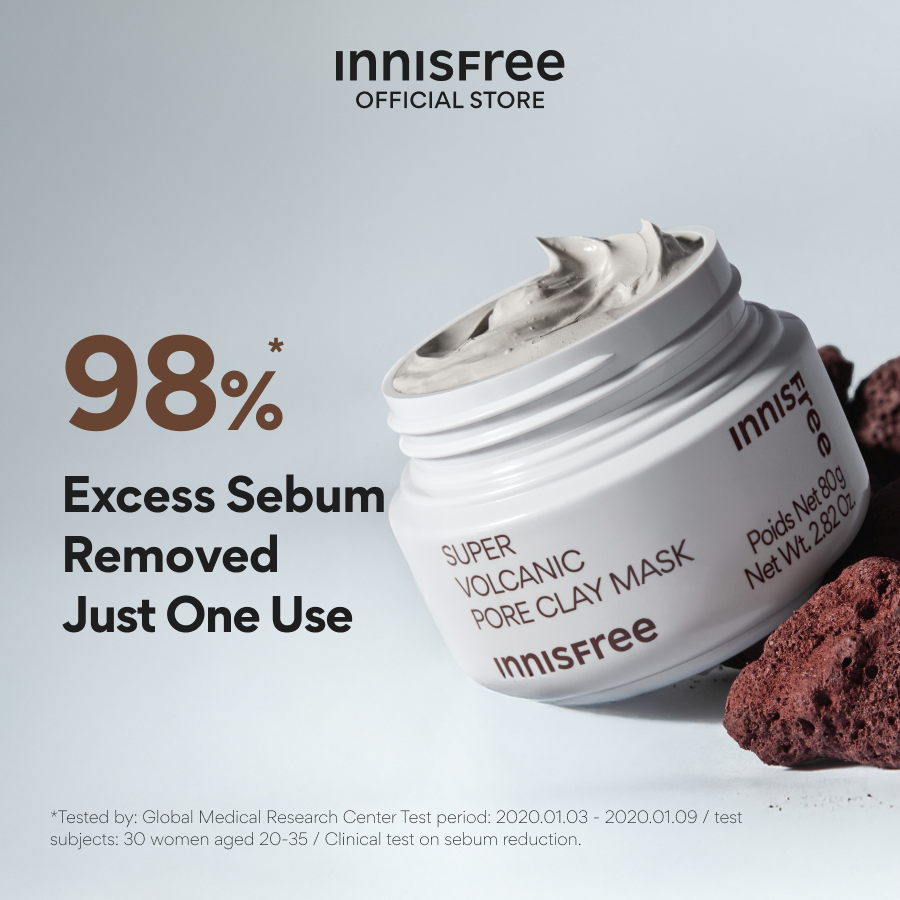
Clay masks remain one of the most satisfying weekly skincare rituals — that clean, refined feeling after rinsing is real. But misuse causes more harm than good.
How Clay Absorbs Oil
Clay minerals like kaolin and bentonite have plate-like structures that bind to sebum and surface impurities. Jeju volcanic clusters add porous micro-particles that increase surface area for absorption — the principle behind innisfree's Volcanic Pore Clay Mask.
Who Should Use Clay Masks
- Oily and combination skin with visible T-zone shine
- Congested pores and blackheads
- Occasional deep cleaning (not daily cleansing replacement)
Skip or reduce frequency if you have very dry, eczema-prone, or actively inflamed skin.
Application Best Practices
- Clean skin only — never apply over makeup or sunscreen
- Even thin layer — thicker ≠ better
- 5–10 minutes — remove before fully cracking
- Moisturize immediately after rinsing
- Once or twice weekly maximum for most skin types
Mistakes That Cause Problems
- Leaving on too long: Draws out necessary skin lipids, causing rebound oiliness
- Same day as strong acids/retinol: Overwhelms barrier — alternate nights
- Skipping moisturizer: "Squeaky clean" is not the goal
Volcanic vs Generic Clay
Jeju-sourced volcanic ore contains mineral profiles specific to the island's geological history. While all clays absorb oil, innisfree's formulation combines volcanic clusters with AHA for dual chemical and physical refinement.
Complementary Daily Care
Masks are weekly events. Daily pore management comes from Volcanic Pore Toner and consistent non-comedogenic moisturizing — yes, even oily skin needs daily hydration.
Read the full Volcanic product line guide.